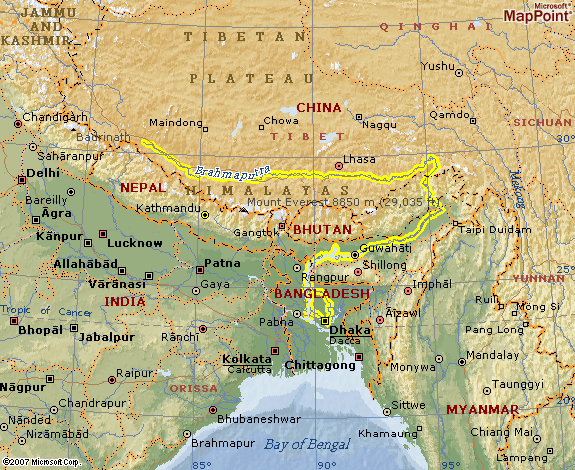
It’s 10am and 2 jeeps are waiting outside to take us to Nalbari, a district of Assam just outside of Guwahati. We are going on a field trip to supplement what we have been learning about: dams, conservation and environmental degradation in North East India. We climb into the jeeps and begin the hour-and-a-half long journey to the villages.
As our jeep approaches central Guwahati, traffic increases and there are more rickshaws, auto-rickshaws and cars to manoeuvre around, more stalls line the streets and more people are going about their morning routines. Tea stalls are busy with customers getting in their first chai of the day. No milk; black and sugary is the custom for Assam tea. Fruit and vegetable vendors, their spread of produce nearly reaching the road, calling to the passing crowds, looking for their first purchase of the day. Left merges into right. Lines and boundaries are arbitrary. Near-collisions; a constant occurrence. It is confirmed that our driver is following the jeep ahead of us and doesn’t actually know where we are going. Maintaining eye contact of the lead jeep becomes that much more important than road rules. Despite all of this, I’m feeling calm. Our driver expertly dodges road hazards and oncoming traffic that have wandered a little bit too far over, all the while maintaining sight of the other jeep. He’s got this under control.
 On the way out of the city we cross the great Brahmaputra River, one of the largest rivers in the North East, by a large bridge. The water is rushing towards the Bay of Bengal, swirling and churning in protest after pushing past the pillars that have impeded its natural flow. The scenery changes and becomes slowly less inhabited. The number of cars, rickshaws, stalls, people, have decreased. Road obstacles are now four legged and oblivious to laws, order. Near-death experiences are frequent, but not for us. The landscape is changing to increasing shades of green. Finally we arrive at our destination, a smaller river. We see men throwing fishing nets from the banks of the river, stopping only to glance at the strangers watching their work from the bridge.

 We meet some NGO workers from Gramya Vikash Mancha (GVM) who take us to see a small and dried up canal, built illegally by the villagers in an attempt to irrigate their dried out crops. The villagers have been forced to abandon their efforts and are no longer able to produce three crops per year as was common in the past. We have a following of about 30 children from the village, taking pictures, and staring at us with shining eyes; curious. We load back into the jeeps and continue to another village further away.
 Roads divide land containing houses and flooded rice paddies. Many of the flooded areas are choked with water hyacinth (invasive species introduced during colonial rule) and other plants. Some of the less weed infested plots are being ploughed by man or cow-powered equipment. The NGO workers inform us that this land is only above water for 180 days of the year. Within two months, everything will be flooded and the villagers will have to seek refuge elsewhere until the flood waters recede. An area that used to be able to produce three seasons worth of harvests per year can now only produce one.
 We are taken to another part of the river, upstream to where we first arrived. Nalbari is situated between two rivers that originate in Bhutan, the Pagaldia and Buradia rivers. The area between them is considered a wetland but is drying up during the winter months in recent years. Yet another area, inhabited by few villagers, has been bought by the government for small carp and tilapia fisheries. It seems that the water-logged fields behind are a “favourite location” for more gruesome government activities.
We’ve spent some time over the past week of our study circle listening to researchers and activists talk about the mega dam construction proposals for North East India. There are plans to build some 160 dams in the North East to produce 70GW, (more or less) of energy. Most of these dams are planned for Arunachal Pradesh (estimated to produce 50GW of that power), a more Himalaya abundant area, but there are plans for more dams in Assam, Nagaland, Mizoram. For reference, the 70GW proposed to be added in the next ten years or so, is just less than the total hydropower capacity added in all of India during 60 years of independence. The whole North East cumulatively needs about 1.2GW to be sufficiently powered. The rest of the power is proposed to be transmitted to the rest of the Indian subcontinent which already has a very rocky relationship with the North East (there are many-fold reasons for this, a few of which we have talked about during this study circle).
There is concern building for the more well-known negative impacts of dams on existing ecosystems; silt deposits and mineral displacement, sand banking when embankments are breached, decreased diversity of species due to unfavourable conditions. Despite laws which require proper environmental assessments and approval from the minister of environment and forests, as yet, very little research has been done on the environmental impacts of these mega dams on the land, communities, ecosystems and agriculture downstream of the proposed dams. Very little research has been done on how these dams will fair with the drastically changing weather patterns and effects of climate change. Research that has been done doesn’t seem to be getting much attention. Did I mention that the North East is a seismically active area? The devastation from a breach of any of these mega dams, once they are built, by a large earthquake or earthquake induced landslide would be catastrophic.
Hydro power is certainly considered to be a more favourable energy alternative to coal, oil, gas and nuclear power but there are also much less invasive and destructive ways to harness it. Smaller, localized, run of the river dams may not result in as much power generation but would have much less long term negative effects on the surrounding ecosystems, agriculture and communities. In a time of increasing climate change, land disputes and food security problems, it seems that a much greater precedence should be placed on the importance of maintaining a livable and productive environment than expanding industrial capabilities. So why go through with such a destructive project? It seems there are a lot more corporate sector players encouraging the concrete constructions from behind the scenes. . .
There is, of yet, no dam built on the rivers surrounding Nalbari but a dam is proposed to be built where the rivers join. More likely than not, the inhabitants of this region will have little say in whether or not construction of a dam goes forward.
As our jeep approaches central Guwahati, traffic increases and there are more rickshaws, auto-rickshaws and cars to manoeuvre around, more stalls line the streets and more people are going about their morning routines. Tea stalls are busy with customers getting in their first chai of the day. No milk; black and sugary is the custom for Assam tea. Fruit and vegetable vendors, their spread of produce nearly reaching the road, calling to the passing crowds, looking for their first purchase of the day. Left merges into right. Lines and boundaries are arbitrary. Near-collisions; a constant occurrence. It is confirmed that our driver is following the jeep ahead of us and doesn’t actually know where we are going. Maintaining eye contact of the lead jeep becomes that much more important than road rules. Despite all of this, I’m feeling calm. Our driver expertly dodges road hazards and oncoming traffic that have wandered a little bit too far over, all the while maintaining sight of the other jeep. He’s got this under control.
 On the way out of the city we cross the great Brahmaputra River, one of the largest rivers in the North East, by a large bridge. The water is rushing towards the Bay of Bengal, swirling and churning in protest after pushing past the pillars that have impeded its natural flow. The scenery changes and becomes slowly less inhabited. The number of cars, rickshaws, stalls, people, have decreased. Road obstacles are now four legged and oblivious to laws, order. Near-death experiences are frequent, but not for us. The landscape is changing to increasing shades of green. Finally we arrive at our destination, a smaller river. We see men throwing fishing nets from the banks of the river, stopping only to glance at the strangers watching their work from the bridge.

 Roads divide land containing houses and flooded rice paddies. Many of the flooded areas are choked with water hyacinth (invasive species introduced during colonial rule) and other plants. Some of the less weed infested plots are being ploughed by man or cow-powered equipment. The NGO workers inform us that this land is only above water for 180 days of the year. Within two months, everything will be flooded and the villagers will have to seek refuge elsewhere until the flood waters recede. An area that used to be able to produce three seasons worth of harvests per year can now only produce one.
 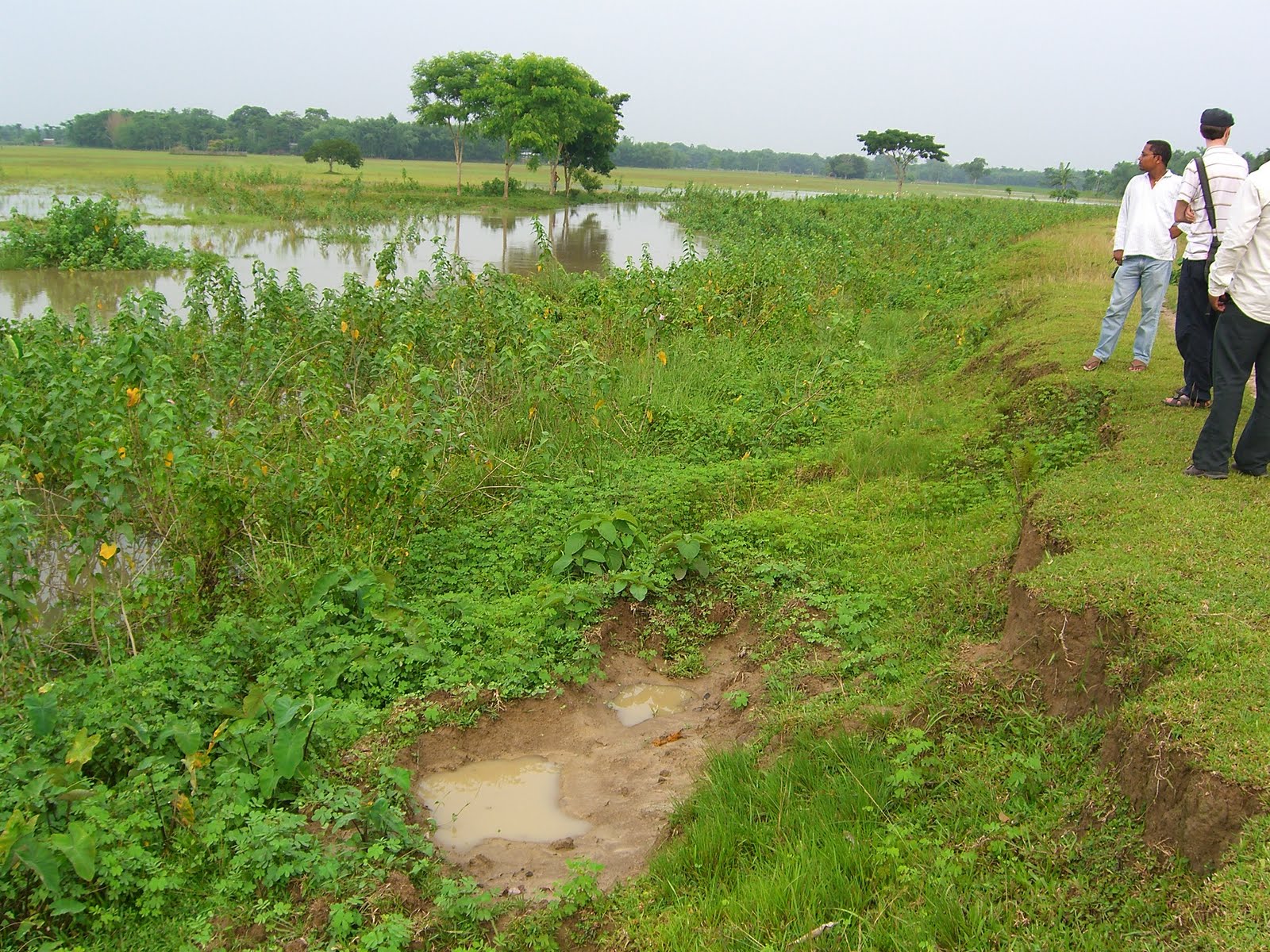 We are taken to another part of the river, upstream to where we first arrived. Nalbari is situated between two rivers that originate in Bhutan, the Pagaldia and Buradia rivers. The area between them is considered a wetland but is drying up during the winter months in recent years. Yet another area, inhabited by few villagers, has been bought by the government for small carp and tilapia fisheries. It seems that the water-logged fields behind are a “favourite location” for more gruesome government activities.
We’ve spent some time over the past week of our study circle listening to researchers and activists talk about the mega dam construction proposals for North East India. There are plans to build some 160 dams in the North East to produce 70GW, (more or less) of energy. Most of these dams are planned for Arunachal Pradesh (estimated to produce 50GW of that power), a more Himalaya abundant area, but there are plans for more dams in Assam, Nagaland, Mizoram. For reference, the 70GW proposed to be added in the next ten years or so, is just less than the total hydropower capacity added in all of India during 60 years of independence. The whole North East cumulatively needs about 1.2GW to be sufficiently powered. The rest of the power is proposed to be transmitted to the rest of the Indian subcontinent which already has a very rocky relationship with the North East (there are many-fold reasons for this, a few of which we have talked about during this study circle).
There is concern building for the more well-known negative impacts of dams on existing ecosystems; silt deposits and mineral displacement, sand banking when embankments are breached, decreased diversity of species due to unfavourable conditions. Despite laws which require proper environmental assessments and approval from the minister of environment and forests, as yet, very little research has been done on the environmental impacts of these mega dams on the land, communities, ecosystems and agriculture downstream of the proposed dams. Very little research has been done on how these dams will fair with the drastically changing weather patterns and effects of climate change. Research that has been done doesn’t seem to be getting much attention. Did I mention that the North East is a seismically active area? The devastation from a breach of any of these mega dams, once they are built, by a large earthquake or earthquake induced landslide would be catastrophic.
Hydro power is certainly considered to be a more favourable energy alternative to coal, oil, gas and nuclear power but there are also much less invasive and destructive ways to harness it. Smaller, localized, run of the river dams may not result in as much power generation but would have much less long term negative effects on the surrounding ecosystems, agriculture and communities. In a time of increasing climate change, land disputes and food security problems, it seems that a much greater precedence should be placed on the importance of maintaining a livable and productive environment than expanding industrial capabilities. So why go through with such a destructive project? It seems there are a lot more corporate sector players encouraging the concrete constructions from behind the scenes. . .
There is, of yet, no dam built on the rivers surrounding Nalbari but a dam is proposed to be built where the rivers join. More likely than not, the inhabitants of this region will have little say in whether or not construction of a dam goes forward.